Featured

Grotto Recipe

You won’t find this recipe in any church cookbook.

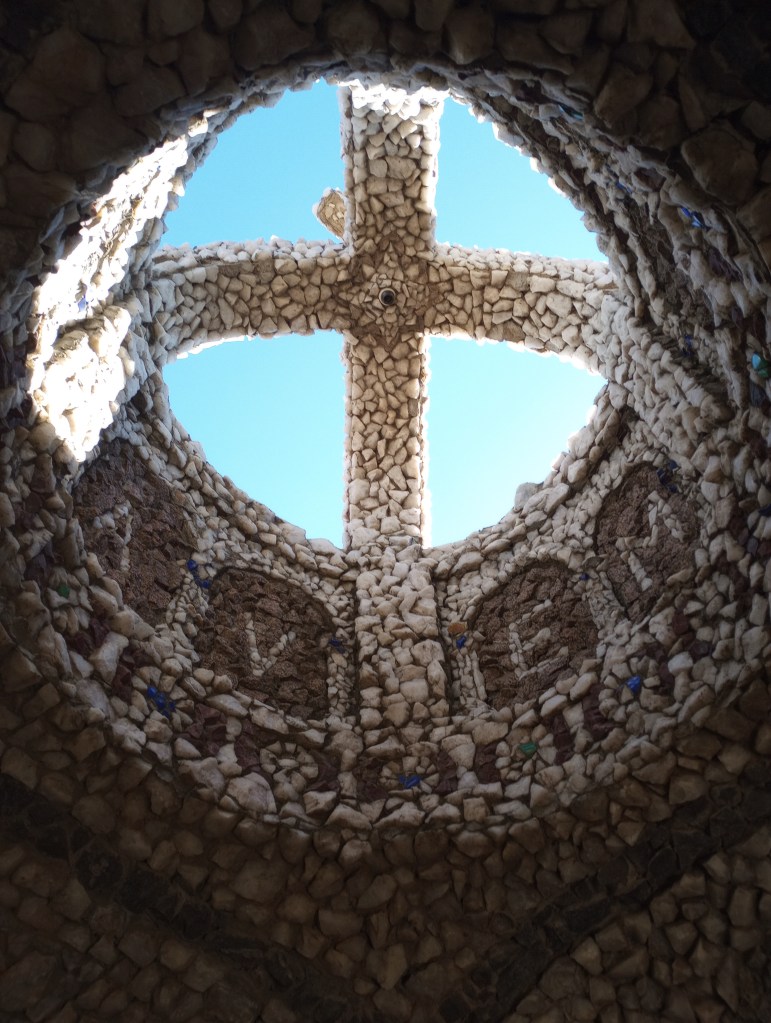
Mix 125 sacks of cement, 20 tons of sand, 64 tons of local rock, 3 tons of decorative rock, 4 1/2 tons of brick, and one rock from the Calista Catacombs at Rome, and what do you get? A Byzantine grotto! At least that’s what Father Peter N. Scheier got when he began erecting, in 1927, St. Peter’s Grotto at tiny Farmer, South Dakota.

The quaint stone marvel on the prairie measures 13 1/2 feet square. Turrets decorate the four corners, and an open-air cupola lights up the three altars inside.

Why was the grotto designed in a Byzantine style — a unique architectural form for a manmade cave? Only Father Scheier knows for sure, and he’s long gone to his heavenly reward. But his “grotto recipe” still stands — as solid as the rock of Saint Peter.

Excerpted from Incredible Catholic America: Smallest, Tallest, Oldest, Oddest (OSV, 2025)
The Power of the Rosary

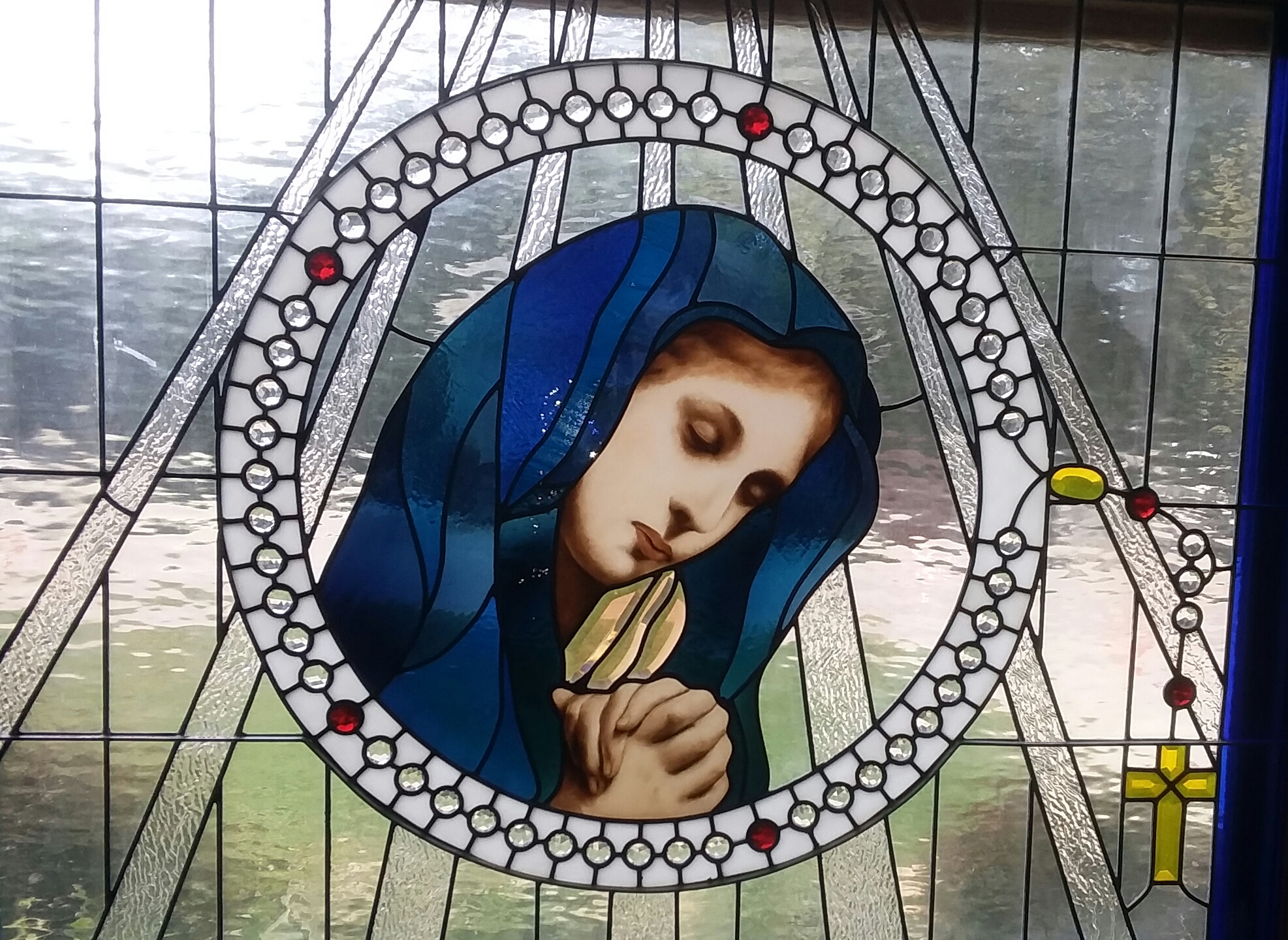
House of Mary Shrine, Yankton, South Dakota

If two strands are stronger than one, imagine the supernatural power of dozens of people praying the Rosary in one accord and with one intention. Folks at four Catholic churches in Georgia, Kansas, and Missouri don’t need to imagine — they know.

When their men left to fight in World War II, parishioners at the Catholic Shrine of the Immaculate Conception in Atlanta, Georgia, St. Mary’s Church in St. Benedict, Kansas, St. Mark the Evangelist Church in St. Marks, Kansas, and St. John Church in Leopold, Missouri, also went to war — spiritual war. They gathered weekly, often daily, to pray the Rosary, imploring Mary to cover their soldiers with the mantle of her protection. Nobody knew if or when they would see their loved ones again.

Week after week, year after year, the Rosary warriors prayed. “Spare our husbands, sons, and brothers,” they pleaded, their tears splattering the church floors.

It’s here!

Catholic America is fun! It’s captivating! Inspirational! Eye-opening! You simply won’t believe it! Which state capital named for a saint was originally called “Pig’s Eye”? Where is the tallest baptismal font, standing over thirteen feet tall? Who are the “three holy peas in a pod”?

The answers to these questions are just the beginning of the incredible facts, trivia, people, churches, and lore found in Incredible Catholic America.

This book is more than a collection of random facts and trivia. It presents vignettes of heroic men and women, who stood in the gap for the American Catholic Church. Each of the 300-plus facts and stories boasts its own unique claim to fame. Smallest. Tallest. Oldest. Or oddest, in a saintly sort of way. With loads of people, places, and things to explore in Catholic America, you’ll want to return to this book again and again!

Featured

The Gates of Saint Peter

(Photo courtesy of Saint Peter Chamber of Commerce)

Are the gates of Saint Peter real?

They are in Saint Peter, Minnesota! And if the pearly gates won’t open for you, repent and try again!

A bit of town levity, the pearly-white iron gates are illuminated at night for an even more surreal feel.

You’ll find the gates at 101 S. Front Street.

© 2022 by Marion Amberg

Featured

A Lamp unto Our Path

Wherever you go in New Mexico, you’ll find Spanish place names exalting God and things divine. The country’s oldest capital city, Santa Fe means Holy Faith. The Santa Cruz River is Spanish for Holy Cross River; the Sangre de Cristo Mountains, the Blood of Christ Mountains.

Photo by Marion Amberg

You’ll also find a litany of villages named for saints, including San Ysidro (Saint Isidore the Farmer), Santa Teresa (Saint Teresa of Avila), Santa Rosa (Saint Rose of Lima), and San Miguel (Saint Michael the Archangel). The town of Belén means Bethlehem.

Perhaps the most intriguing Spanish name of all was bestowed upon the yucca: Lampara de Dios (Lamp of God). When the yucca — New Mexico’s state flower — blooms in late spring and early summer, the white blossoms collectively resemble an old-fashioned lamp. Some say the plant’s sword-shaped leaves represent God’s Word (a two-edged sword), the white flowers his light unto our path.

Copyright © 2021 Marion Amberg

To receive more inspiring and fun posts, click on the Follow button below.

Featured

Toothpicks for Minnie: A Mother’s Day Tribute

Nobody ever dreams of finding love in a toothpick. After all, it’s barely a sliver of wood. But sometimes the simplest things in life teach the biggest lessons. The trouble is nobody knows how or when it will happen. I certainly didn’t.

For years I had ribbed Mother about her habit of leaving toothpicks on window sills in the living room. Whenever I pulled back the curtains, I found toothpicks waiting for anxious teeth. They waited anxiously at not just one window but at nearly every window. Some even waited on the baseboard. I hated Mother’s toothpicks, and her idiosyncrasy began picking away at me.

Until one day, and it goes without saying what happened.

How it happened is still a mystery. Was it my subconscious? Was I thinking about Mother when my toothpick found its way to the ledge of my window? I don’t know, but I gasped in disgust. I had broken my vow never to be like Mother.

Suddenly, a brother’s accusation that I laughed just like Mother was no longer humorous. “Not so,” I had chortled then. Now I knew it was true — my laughter is a cackle facsimile of Mother’s. Toothpicks and laughter. Anything else?

Featured

Many Steps of Faith: The Good Friday Walk to Chimayo

“Take up your cross and follow me,” Jesus tells us. And every Lent, tens of thousands of faithful do just that: They pick up their crosses and make the Good Friday pilgrimage on foot to El Santuario de Chimayo, a centuries-old adobe church in Chimayo, New Mexico. Some pilgrims walk from nearby villages. Pilgrims in Albuquerque begin their 100-mile journey on Palm Sunday in order to arrive on Good Friday. Wherever there’s a road — north, south, east, west — people start walking.

Like a giant Communion host, the paschal moon lights up the sky on Holy Thursday night, a lamp unto pilgrims’ feet beginning the thirty-mile journey from Santa Fe. Bundled up in coats and hats, the walkers are a microcosm of the Church in the American Southwest: Indians, Hispanics, and Anglos, all walking together on the road to Calvary. A few pilgrims carry life-sized wooden crosses, a heavy penance as the miles go by — miles filled with heartwarming stories of sacrifice and faith.

“Why are you making this pilgrimage?” a reporter asks an elderly woman, her walking stick covered with photos of family. “I’m praying with my feet, begging God to bring my kids and grandkids back to church,” she replies. “It’s in the journey — not the destination — that God hears us.”

Pilgrims getting a head start on the Good Friday walk. (Photo by author)

Walk. Walk. Walk. A steady stream of Rosaries are prayed in English and Spanish: “Our Father, Who art in heaven … Padre nuestro, que estás en el cielo.” From a distance, the procession of flashlights looks like fireflies. Walk. Walk. Walk. As the hours pass, more Rosaries saturate the crisp air.

Featured

The Miracle of a Million Pennies

One penny alone isn’t much, but when millions of pennies are gathered together, the miraculous happens. That’s the “penny-nomenal” tale of Dr. Kate Newcomb and the World’s Biggest Penny in Woodruff, Wisconsin.

Dr. Kate and the World’s Largest Penny

The story begins in 1931 when Dr. Kate began practicing medicine in Wisconsin’s north woods. Her “clinic” spanned 300 square miles; house calls took her down dirt roads and across lakes in a canoe. When her car got stuck in the deep snow, she trekked by snowshoe to remote cabins to deliver one of more than 3,000 babies by the light of a kerosene lamp. Nothing could stop the “Angel on Snowshoes,” as she fondly came to be known.

In 1941 Dr. Kate opened her own clinic in Woodruff. Her hair graying and her step slowing, the 56-year-old country doctor also began dreaming of her own hospital. It was becoming increasingly more difficult for her to treat patients in hospitals hundreds of miles away. But where would the money come from? It was a hardscrabble life in these north woods.

The Good Lord had a plan — and what a plan it was!

Featured

A Gift of Peace

(Photo by Marion Amberg)

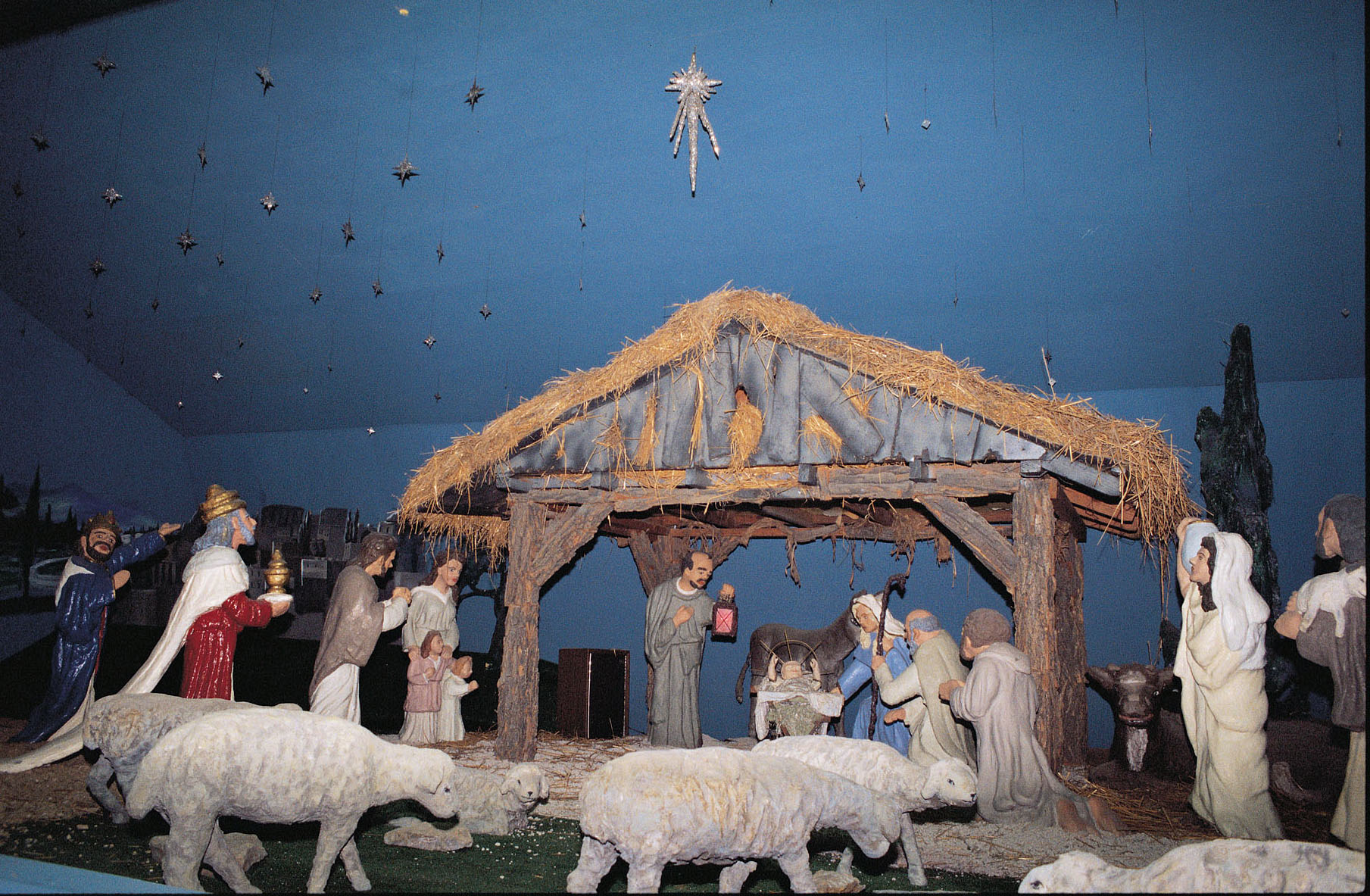
It’s a traditional Nativity scene. Christ Child. Angels. Wise men. Shepherds and sheep. What isn’t so traditional is who made it: German POWs incarcerated at Algona, Iowa.

The story begins in 1944 when Sergeant Eduard Kaib was captured in France and shipped to Camp Algona, a base camp in north-central Iowa that housed 3,200 German POWs and oversaw 34 branch camps in Minnesota, Iowa, and the Dakotas.

Suffering from war injuries, Kaib was also mired in depression. He missed deeply his homeland, family, and German Catholic religious traditions. One day, the radio operator had a divine idea.

“Sir, I’d like to build a Nativity,” Kaib petitioned Camp Commander Arthur T. Lobdell.